


LATEST NEWS
FeNO Test for Asthma: What your Results Mean
A FeNO test for asthma measures nitric oxide in your breath, helping your clinician identify a type of airway inflammation that often responds to steroid inhalers. Your result is reported in parts per billion (ppb). It needs to be interpreted alongside your symptoms, medicines and other test results. For people…
Read More
Respiratory rate during sleep: what is normal and what do Apple Watch readings mean?
Around 12 to 20 breaths per minute is a commonly used reference range for adults at rest. Sleep breathing varies, so this is not a strict overnight safety threshold. Breathing changes with sleep stage, and a smartwatch’s lowest recorded value is different from your average across the night. Your usual…
Read More
Why do I get breathless walking or climbing stairs?
Walking uphill and climbing stairs make your muscles, heart and lungs work harder. Some increase in breathing is expected, but new or worsening breathlessness can reflect reduced fitness, asthma, another lung condition, a heart problem or anaemia. The most useful clue is whether the same activity has become harder for…
Read More
Why do I Wake With Night Sweats and Poor Sleep?
Waking up sweating can be caused by a warm bedroom, menopause, anxiety, medicines, alcohol or an underlying medical condition. Obstructive sleep apnoea is another possibility, particularly if you also snore, wake gasping or feel unrefreshed during the day. The pattern and accompanying symptoms help a clinician decide what to investigate.…
Read More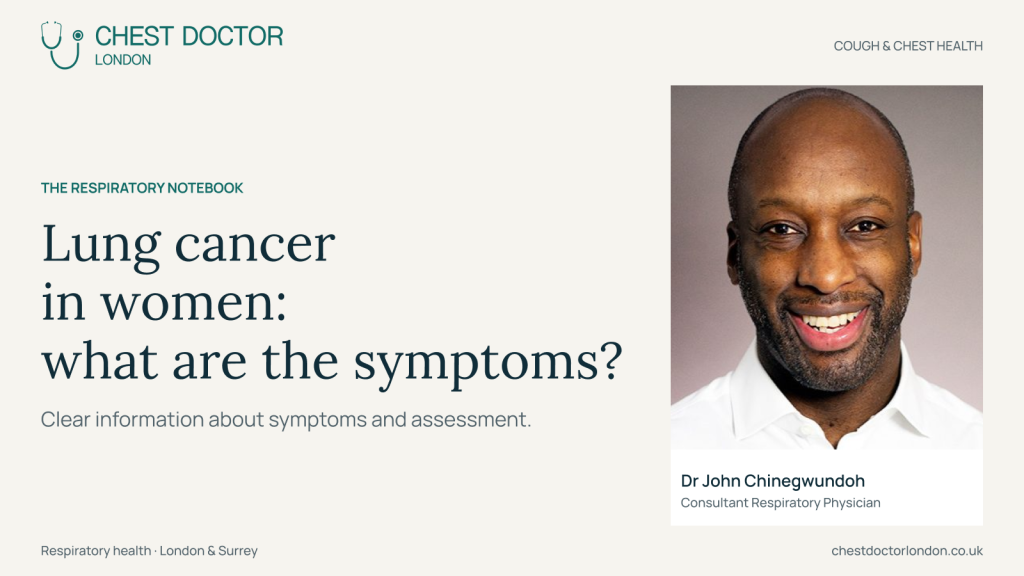
What are the Symptoms of Lung Cancer in Women? London & Surrey
Lung cancer symptoms in women can include a persistent or changing cough, breathlessness, repeated chest infections, coughing up blood, chest or shoulder pain, unexplained weight loss and ongoing tiredness. The main warning signs are similar in women and men. Early lung cancer may cause no symptoms, and women who have…
Read More
Cardiology Tests for Breathlessness and What Normal Results Mean
Heart tests help establish whether a problem with your heart could explain shortness of breath. An ECG, echocardiogram and NT-proBNP blood test assess different aspects of heart function. Reassuring results make some cardiac causes less likely, but their meaning depends on which tests you had, when they were performed and…
Read More
Why am I Breathless Despite Normal Heart Tests?
Breathlessness can continue after reassuring heart tests because breathing also depends on the lungs, blood, breathing muscles and physical conditioning. Possible non-cardiac causes include asthma, other lung conditions, anaemia, breathing pattern disorder and reduced fitness after illness. Normal heart tests help narrow the investigation, but they do not explain the…
Read More
Could Sleep Apnoea Explain Poor Sleep and Daytime Tiredness?
If you sleep seven or eight hours and still wake unrefreshed, obstructive sleep apnoea is an important possibility to consider. It can go unrecognised for years because the breathing disturbances happen while you are asleep, often without any memory of them. Yes, sleep apnoea can explain poor sleep and daytime…
Read More
Why Do I Snore? Causes & Assessment
The short answer Snoring is the sound of soft tissues vibrating in your upper airway during sleep. It happens when the airway narrows and airflow makes those tissues vibrate. Snoring is common and does not always mean you have a medical condition. However, it should be assessed if someone has…
Read More
Can Lack of Sleep Cause Weight Gain? When to Consider a Sleep Assessment | Chest Doctor London
Yes, regularly getting too little sleep can contribute to weight gain. Sleep loss can influence appetite, eating patterns and activity levels, making weight management more difficult. However, it does not affect everyone in the same way, and weight gain alone does not diagnose a sleep disorder. If weight gain accompanies…
Read More- « Previous
- 1
- 2
- 3
- 4
- Next »